Hot air welding maintenance keeps your seams strong, your production on schedule, and your machine running for years. A few minutes of daily care, a short weekly and monthly routine, and knowing the early warning signs prevent most breakdowns before they stop production. Miller Weldmaster builds industrial hot air welders for easy upkeep, and this guide shows how to keep yours in top shape.
Neste guia:
- Why hot air welding maintenance matters
- Daily maintenance checklist
- Weekly and monthly maintenance
- 5 signs your hot air welder needs maintenance
- Troubleshooting common problems
- Seasonal adjustments
- Extending the life of your welder
- Perguntas frequentes
Porque é que a manutenção da soldadura por ar quente é importante
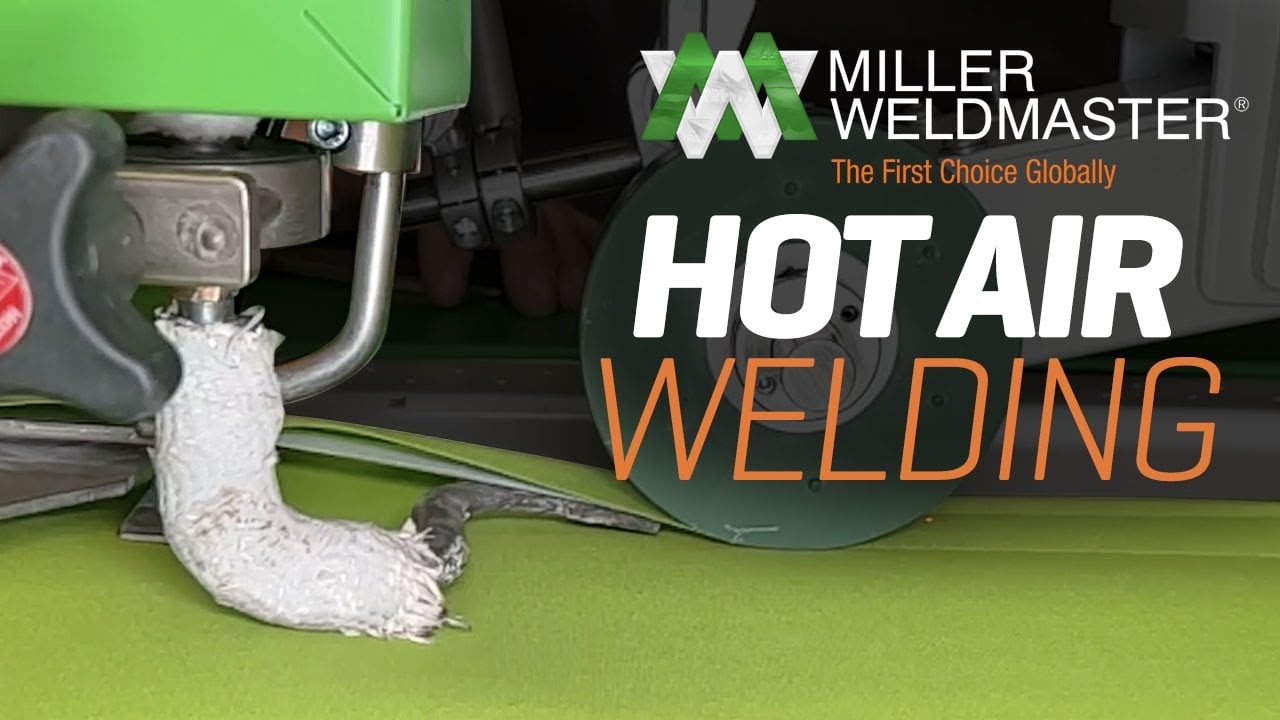
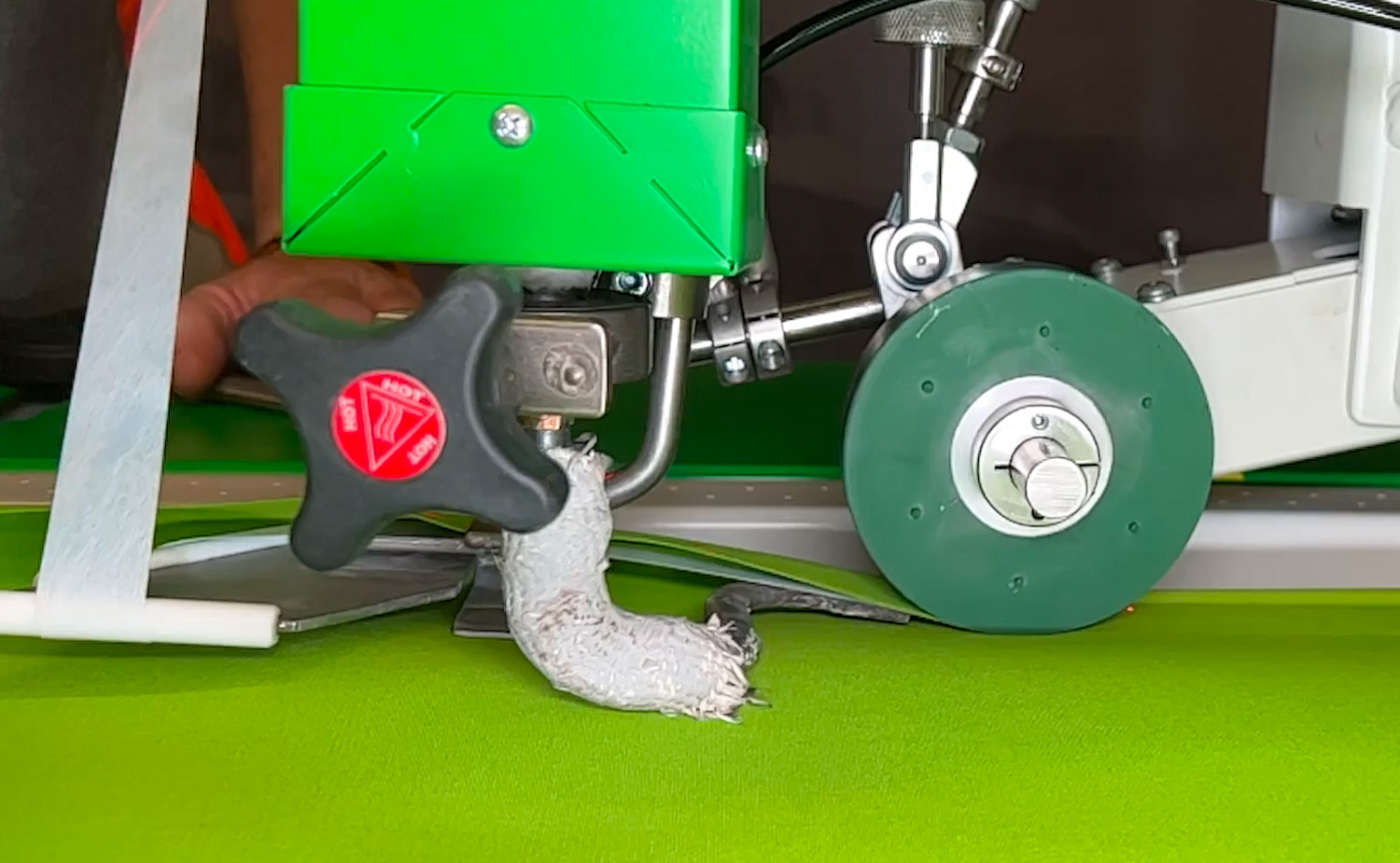
A hot air welder melts the surfaces of thermoplastic fabrics with heated air and presses them together with rollers. When the nozzle, rollers, or heater drift out of condition, seams weaken long before the machine stops. For a refresher on the process, see how hot air welding works.
Regular maintenance:
- Prevents unexpected breakdowns and downtime
- Keeps seam strength and appearance consistent
- Extends the life of the machine and its parts
- Protects your investment in high-value equipment
Catching problems early costs far less than fixing them late:
- Minor issue: Cleaning a partly blocked nozzle takes a few minutes and costs almost nothing.
- Major repair: Replacing a burnt-out heating element can mean hours of downtime, a costly repair, and a ruined production run.
Daily Maintenance Checklist
Treat your hot air welder as a precision tool. These checks take only a few minutes at the start or end of each shift.
Clean the Nozzle After Every Shift
Melted plastic and debris build up on the nozzle, restrict airflow, and cause uneven heating and weak seams. Clean it with a brass brush or an approved cleaner—never a sharp tool that could damage the nozzle surface. Our step-by-step nozzle cleaning guide walks through the process.
Inspecionar os rolos e as correias
Look for cracks, buildup, or wear, and make sure the rollers are aligned so they apply even pressure. Check that electrical connections and fasteners are secure and free of corrosion.
Check Heat and Speed Settings
Run a test weld on a sample of the day's material to confirm the temperature, speed, and pressure settings are right before production starts.
Do a Quick Safety Check
Examine power cords, sensors, and emergency stops, and report any damage right away. Wear heat-resistant gloves during inspections and maintenance, and follow your machine's shutdown procedure so the heater cools properly.
Weekly and Monthly Maintenance
Schedule these tasks every week or month, depending on how heavily you run the machine:
- Lubricate moving parts: Use manufacturer-approved lubricants to prevent wear and friction.
- Inspect heating elements: Watch for discoloration or slower heating, and replace the element before it fails completely.
- Clean air filters and sensors: Dust and debris restrict airflow and affect seam quality.
- Keep controls up to date: On machines with digital controls, install software updates to keep calibration accurate.
5 Signs Your Hot Air Welder Needs Maintenance
Small problems rarely stay small. Watch for these warning signs and act on them early.
1. Uneven or Weak Seams
- What it looks like: Loose bonding, peeling, or seam strength that varies along the weld.
- Likely causes: Misaligned or worn rollers, a dirty or misaligned nozzle, or fluctuating heat.
- What to do first: Run a test weld, inspect the rollers, and check nozzle alignment.
2. Discolored, Burnt, or Damaged Material
- What it looks like: Scorching, melted spots, or warped edges.
- Likely causes: Temperature set too high, restricted airflow, or a failing heating element.
- What to do first: Verify the temperature settings, check airflow, and inspect the heating element.
3. Strange Noises, Vibrations, or Odors
- What it looks like: Grinding sounds, shaking, or a burning smell.
- Likely causes: Worn bearings, loose components, or motor problems.
- What to do first: Power down right away, inspect the rollers and moving parts, and call for service if the problem continues.
4. Feeding or Speed Problems
- What it looks like: Jerky movement, uneven feeding, or changing speed.
- Likely causes: Misaligned rollers, worn belts, calibration drift, or drive motor issues.
- What to do first: Clear debris, inspect belts and rollers, and recalibrate the machine.
5. Frequent Overheating or Shutdowns
- What it looks like: Overheating mid-run, warning lights, or sudden stops.
- Likely causes: Clogged airflow, dirty filters, failing sensors, or electrical faults.
- What to do first: Clear the airflow path, clean or replace filters, and call for service if it happens again.
Quick-Action Checklist
When you notice any of these signs:
- Power down and let the machine cool.
- Inspect the nozzle, rollers, and belts for visible problems.
- Verify the temperature and speed settings.
- Clean any debris or buildup.
- If the problem comes back, contact a service technician.
Resolução de problemas comuns de soldadura a ar quente
| Problema | Likely cause | Solução |
|---|---|---|
| Costuras irregulares | Clogged nozzle, misaligned rollers | Clean the nozzle, realign the rollers |
| Material queimado | Temperature too high | Lower the temperature and run a test weld |
| Costuras fracas | Speed too fast, temperature too low, dirty material | Adjust speed and heat, clean the surfaces |
| Bubbles or wrinkles | Moisture in the material, airflow problems | Dry the material, check the air supply |
| Poor bonding | Contaminated surfaces or incompatible materials | Clean the surfaces and confirm the materials can be welded together |
Ajustes sazonais para soldadores de ar quente
Shop conditions change with the seasons, and so does the way materials weld. Cold air can stiffen materials, while high humidity can trap moisture and weaken seams. PVC-coated fabrics in particular respond to changes in temperature and humidity.
- Adjust settings: Fine-tune temperature, airflow, and pressure to match shop conditions, and confirm with a test weld.
- Store it right: Keep the machine in a dry, dust-free area and avoid condensation during transport.
For seasonal settings in more detail, read our guide to adjusting for temperature and humidity.
Prolongar a vida útil da sua máquina de soldar a ar quente
- Train your operators: Good habits and correct setup reduce errors and prevent premature wear.
- Use OEM parts: Generic parts may shorten machine life. Always use manufacturer-approved replacements.
- Keep spare parts on hand: Rollers, belts, and heating elements are the most common wear parts.
- Log recurring issues: Record error codes and repeat problems so you can spot patterns early.
- Schedule professional service: Annual or semi-annual inspections catch issues early and keep the machine calibrated.
A planned service schedule does most of this work for you—see how fabric welding machine service plans keep equipment performing.
If you're adding or replacing equipment, our hot air welding machine buyer's guide covers the features that make upkeep easier.
Service and Support From Miller Weldmaster
Miller Weldmaster has built industrial fabric welding machines for more than 50 years. Our machines are designed for durability and easy upkeep, backed by training programs, genuine OEM parts, and global Miller Weldmaster service and support.
Need a hand with an issue that keeps coming back? Contact our service team.
Perguntas frequentes sobre a manutenção da soldadura por ar quente
What daily maintenance does a hot air welder need?
Clean the nozzle, inspect the rollers and belts, run a test weld to confirm the heat and speed settings, and do a quick safety check of cords, sensors, and emergency stops.
What are the first signs a hot air welder needs maintenance?
Weak or uneven seams, burnt or discolored material, unusual noises or vibrations, jerky feeding, and frequent overheating are the most common early signs.
Porque é que a minha máquina de soldar a ar quente está a produzir costuras fracas?
Common causes are a welding speed that is too fast, a temperature that is too low, dirty material, worn or misaligned rollers, or a dirty nozzle.
When should I replace a hot air welder's heating element?
Replace it at the first sign of slower heating or discoloration, before it fails completely and stops production.
Can humidity affect hot air welding?
Yes. Moisture in the material or the air can cause bubbles and weak seams. Keep materials dry, adjust your settings, and confirm with a test weld.
Porque é que a minha máquina de soldar a ar quente está a fazer ruídos invulgares?
Grinding, shaking, or rattling often points to worn bearings, loose components, or misaligned rollers. Power down, inspect the moving parts, and call for service if the noise continues.
When should I call for professional service?
Operators can handle cleaning and simple calibration in-house. Call a service technician for problems that keep coming back, electrical faults, or repeated overheating.
Does Miller Weldmaster offer maintenance support?
Yes. Miller Weldmaster provides operator training, service plans, genuine OEM parts, and global service support for its customers.