Hot air welding technology utilizes specialized hot air welding machines that deliver controlled heated air at temperatures ranging from 700°F to 1,350°F combined with targeted pressure to create molecular bonds between thermoplastic materials. These advanced machines are central to the hot air welding technology process, enabling the formation of airtight, waterproof seams that often exceed the strength of the parent material itself.
This technology provides a comprehensive solution for thermoplastic joining, featuring various machine types and automation levels tailored to industry needs. Designed for professionals like manufacturing engineers and contractors, hot air welding machines improve production efficiency, weld quality, and long-term durability. Proper machine selection is essential to avoid issues such as inconsistent seam width, human error, and reduced product quality.
Pontos-chave sobre máquinas e tecnologia de soldadura por ar quente
- O controlo preciso das configurações de temperatura, pressão e velocidade é essencial para criar soldaduras resistentes e uniformes em materiais termoplásticos.
- Vários tipos de máquinas — desde as portáteis até às totalmente automáticas — oferecem funcionalidades personalizadas para responder a diferentes volumes de produção e necessidades de aplicação.
- A automação aumenta a eficiência da soldadura, reduz o erro humano e garante uma qualidade uniforme da costura, garantindo um desempenho duradouro.
- A seleção e a manutenção adequadas das máquinas são fundamentais para obter costuras fiáveis, duradouras e herméticas em diversas aplicações industriais.
O que é a soldadura por ar quente?
Hot air welding machines are precision equipment that create molecular bonds in thermoplastic materials through controlled application of heat and pressure. This welding process fundamentally differs from traditional metal welding by using heated air rather than electric arcs to achieve material bonding.
The core process involves directing a stream of heated air to the interface between two pieces of thermoplastic material. This heat softens the material surfaces until their molecular structure becomes mobile. Pressure rollers or manual application then compresses these softened surfaces together, creating bonds that form an airtight, waterproof seam.
This technology matters because it produces professional results without adhesives, solvents, or mechanical fasteners. The resulting joints demonstrate superior durability and can withstand demanding environmental conditions across many applications. For a step-by-step look at the process, see our guide to how hot air welding works.
Componentes principais e funcionamento
Os elementos de aquecimento proporcionam um controlo preciso da temperatura, essencial para uma soldadura consistente em diferentes materiais e variações de espessura. Os sistemas de distribuição de ar incorporam mecanismos de ar comprimido que direcionam o ar aquecido através de bicos especializados para uma aplicação focada. Os mecanismos de aplicação de pressão incluem rolos motorizados ou ferramentas manuais que garantem um contacto uniforme durante o processo de soldadura.
Estes componentes funcionam em conjunto para alcançar o controlo preciso da temperatura e da pressão, fundamental para soldaduras de qualidade. As máquinas modernas dispõem de controlos digitais que eliminam as suposições e reduzem o erro humano na obtenção dos parâmetros de soldadura ideais.
Sistemas de controlo de temperatura e pressão
Advanced control systems feature programmable settings that store optimized parameters for different thermoplastic materials including polyurethane, PVC, and TPO membranes. Temperature monitoring ensures consistent heat application while pressure regulation maintains uniform seam formation.
Automatic welders with digital controls can achieve efficiency levels impossible with purely manual processes while maintaining the ability to adjust parameters for specific manufacturing requirements.
Tipos de máquinas de soldadura por ar quente
Maçaricos de soldadura a ar quente portáteis
Handheld hot air welders are portable tools with variable temperature and airflow controls for detail work, field repairs, complex geometries and tight spaces. Miller Weldmaster’s EliteAir Industrial hot air welder weighs 2.4 lb (1.1 kg), reaches up to 1,202°F (650°C) and runs on 120–220 VAC for in-house or in-the-field repairs of industrial fabrics such as tarps, signs, inflatables, geomembranes and tension structures.
Manual hot air welders excel in applications requiring operator precision and flexibility. Their portability makes them ideal for on-site installation work and repair jobs where larger equipment cannot reach. However, the manual process requires skilled workers to maintain consistent speed and pressure for uniform results.
Sistemas de soldadura semiautomáticos
These systems combine motorized movement with operator control, delivering consistent speed settings while maintaining manual oversight capabilities. The automation eliminates inconsistencies in travel speed while allowing workers to adjust pressure and monitor weld quality in real-time.
Unlike handheld units, semi-automatic machines provide enhanced consistency through mechanized movement control. This approach benefits medium-volume production requiring a balance of flexibility and repeatability without the complexity of fully automated systems.
Miller Weldmaster’s entry-level machines weld at 8–14 m/min; its standard full-size machines store recipes for quick setting recall and weld at up to 35 m/min. The T300 Flex, its most universal welder, combines hot air and hot wedge welding with an array of seam types at up to 30 m/min (100 ft/min).
Máquinas de soldadura automática
Fully automated systems feature programmable controls and high production efficiency. These purpose built machines store welding recipes for different materials and automatically adjust temperature, pressure, and speed settings.
Mass manufacturing applications benefit from reduced operator error and precise temperature and alignment control. The automation level achieves consistent seam width and eliminates variations that can lead to quality issues in high-volume production.
Miller Weldmaster’s automated welding machines are custom built. They can weld multiple rolls of material at once and combine welding with gluing, sewing, grommeting, printing, visual inspection and cutting, controlled from a PLC touch screen with recipe storage; the Moduline System, for example, automates tarp and cover production. Miller Weldmaster reports that most of its automation customers see a return on investment in under two years.
Equipamento especializado
Some hot air welders are built for one product family. Miller Weldmaster’s specialized machines include the TG3600 for geomembrane liners and covers, the FX100 for flexible reinforced ducting and tubing, the BT2000 for flexible storage tanks and bladders, the HG50 banner finishing machine, which welds, grommets and cuts in a single station, and the Calibration Tube System for cured-in-place pipe. These specialized systems address specific industry requirements that general-purpose machines cannot efficiently handle.
Aplicações industriais e guia de seleção de máquinas de soldadura a ar quente
Building on the machine types available, successful implementation requires aligning each machine’s capabilities with the specific demands of your production environment. This includes evaluating how well the equipment supports your materials, workflow, and workplace conditions to ensure long-term performance.
Passo a passo: Processo de seleção de máquinas de soldadura por ar quente
Step 1 — Material Compatibility Assessment
Identifique os tipos de termoplásticos, as faixas de espessura e os requisitos de temperatura dos seus materiais. Realize testes de soldadura com diferentes configurações de temperatura para garantir a compatibilidade antes de avançar com a aquisição de equipamento.
Step 2 — Production Volume Analysis
Determine se os sistemas manuais, semiautomáticos ou automáticos são os mais adequados às suas necessidades de rendimento de produção. Tenha em conta tanto a capacidade atual como os requisitos de expansão futura.
Step 3 — Workplace Requirements Evaluation
Avalie as necessidades de portabilidade, a fonte de alimentação disponível, o acesso a ar comprimido e as limitações do espaço de trabalho. Tenha em conta os requisitos de segurança e as capacidades de formação dos operadores da sua equipa.
Step 4 — Feature Prioritization
Selecione os controlos essenciais, as opções de bicos e o nível de automatização com base nos seus padrões de qualidade e objetivos de eficiência. Tenha em conta o apoio técnico e a disponibilidade de peças sobressalentes por parte dos fabricantes.
Comparação entre máquinas de soldadura por ar quente: sistemas manuais vs. automáticos
A escolha entre sistemas manuais e automáticos depende dos requisitos de volume de produção e das necessidades de consistência da qualidade. Os sistemas manuais oferecem flexibilidade e custos iniciais mais baixos, mas exigem operadores qualificados para alcançar resultados profissionais. Os sistemas automáticos proporcionam uma eficiência superior e eliminam o erro humano, mas exigem um maior investimento de capital e manutenção contínua.
Mesmo com a seleção adequada do equipamento, os operadores enfrentam frequentemente desafios que afetam a qualidade da soldadura e a eficiência da produção.
| Caraterística | Processo manual | Soldadores Automáticos |
| Velocidade de produção | Depends on the operator | Up to 35 m/min (115 ft/min) on Miller Weldmaster full-size machines |
| Investimento inicial | Lowest (handheld tools) | Higher; fully automated systems are custom built |
| É necessária experiência na operação | É necessária uma elevada especialização | Formação básica suficiente |
| Consistência | Variável, depende da qualificação do trabalhador | Resultados uniformes com controlos digitais |
| Necessidades de manutenção | Limpeza mínima e básica | Regular calibration and component replacement |
Desafios comuns e soluções no processo de soldadura por ar quente
Compreender os problemas operacionais típicos ajuda a manter uma qualidade consistente e a maximizar o desempenho do equipamento ao longo de todo o processo de fabrico.
Desafio 1: Qualidade inconsistente da soldadura
Solução: Implemente controlos digitais de temperatura com configurações memorizadas e crie programas de formação abrangentes para a sua equipa.
Os procedimentos de calibração devem ser realizados regularmente para garantir a precisão da temperatura, enquanto os protocolos de monitorização da qualidade ajudam a identificar desvios antes que estes afetem a produção. O estabelecimento de procedimentos de soldadura padronizados reduz a variabilidade e melhora a qualidade geral entre os diferentes operadores e turnos.
Desafio 2: Problemas de compatibilidade de materiais
Solução: Verifique os intervalos de temperatura para materiais termoplásticos específicos, selecione bicos adequados à espessura do material e realize soldaduras de teste antes de iniciar as séries de produção completas.
As especificações dos materiais variam significativamente entre fabricantes, exigindo a validação dos parâmetros de soldadura para cada nova fonte de material. As tabelas de compatibilidade ajudam a orientar as configurações iniciais de temperatura, mas as soldaduras de teste reais proporcionam a verificação mais fiável dos parâmetros ideais.
Desafio 3: Manutenção do equipamento e tempo de inatividade
Solução: Estabelecer planos de manutenção preventiva e manter um stock adequado de peças sobressalentes para minimizar as interrupções na produção.
Os procedimentos de limpeza regulares evitam a acumulação de resíduos que podem afetar a transferência de calor e o fluxo de ar. Os planos de substituição de componentes baseados nas horas de utilização ajudam a evitar falhas inesperadas que podem resultar em paragens dispendiosas e atrasos nos prazos de entrega.
Casos de aplicação das máquinas e da tecnologia de soldadura por ar quente
Hot air welding machines and hot air welding technology play a vital role across a wide range of industries and product applications where strong, durable, and airtight seams are essential. Their ability to create seamless bonds in thermoplastic materials makes them ideal for manufacturing products that require high performance and long-term durability. Whether in factory settings or on-site installations, these machines provide efficient and reliable solutions for joining sheets, membranes, and coated fabrics.
Common applications include industrial fabric fabrication, roofing membrane installation, and the production of inflatables and tarpaulins. The versatility of hot air welding technology allows it to accommodate various material thicknesses and seam widths, making it suitable for both small detail work and large-scale manufacturing processes. Additionally, portable hot air welders enable field repairs and maintenance, extending the usability of products and reducing downtime.
Casos de utilização
- Tarpaulins, covers and truck side curtains
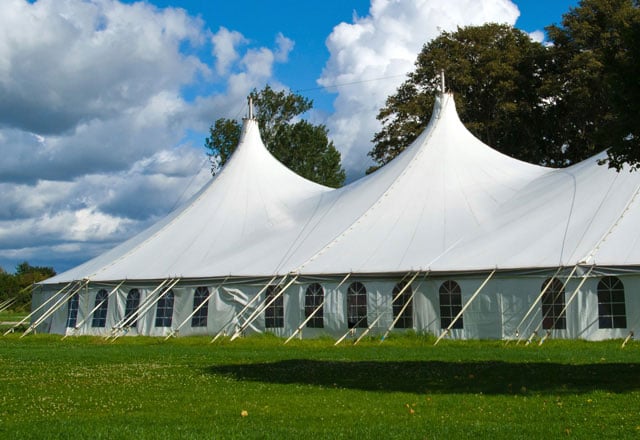
- Tents, shelters, structures and clear span buildings
- Banners, signs and billboards
- Awnings, shades, tension structures and pergolas
- Pool covers and pools
- Geomembrane liners and roofing membranes
- Flexible storage tanks and bladders
- Flexible ducting and tubes
- Inflatables, evacuation slides and containment booms
- Cured-in-place pipe and filtration tubes
- Agricultural and gym curtains, roller doors, mattresses and athletic mats
- On-site repairs with handheld welders
Escolha Miller Weldmaster as suas necessidades em máquinas de soldadura por ar quente
As máquinas de soldadura a ar quente da Miller Weldmaster soluções versáteis para aplicações de união de termoplásticos, quando devidamente selecionadas e operadas. A tecnologia avançada Miller Weldmasteroferece vantagens significativas na criação de uniões duradouras e estanques, sem a necessidade de adesivos ou solventes, tornando-a essencial para indústrias que exigem um desempenho fiável nas juntas.
Como começar a utilizar o Miller Weldmaster
- Step 1: Define Your Requirements
Assess your material requirements and production volume needs with Miller Weldmaster’s expert guidance. - Step 2: Evaluate Your Workspace
Evaluate workspace constraints and automation benefits tailored to your application by Miller Weldmaster specialists. - Step 3: Connect with an Expert
Contact Miller Weldmaster equipment experts to discuss specific machine capabilities, request demonstrations, and receive personalized support to optimize your welding process.

 SAIBA MAIS