Acrylic fabric bonding is an industrial process that joins acrylic canvas, awning, and marine fabrics using heat-activated adhesive tape — creating seams that are stronger, more durable, and leak-resistant compared to traditional sewing.
Miller Weldmaster todas as fases do processo de colagem: como o tecido acrílico se comporta sob o calor, qual o método de soldadura mais adequado ao seu volume de produção, como as costuras coladas se comparam às alternativas costuradas e como evitar as falhas de colagem mais comuns. Quer gere uma pequena loja de toldos ou uma linha de produção de grande volume, a informação aqui apresentada tem um impacto direto na sua decisão de compra.
Acrylic fabric cannot be thermoplastic-welded like PVC because it does not melt and re-fuse — bonding with heat-activated adhesive tape is required instead.
Hot air, hot wedge and impulse welding methods can all activate acrylic bonding tape to create strong, durable seams.
As costuras em acrílico colado eliminam o desbotamento do fio, as fugas nos orifícios da agulha e a curta durabilidade do fio — os três pontos de falha mais comuns na costura de lona acrílica.
O controlo do processo — temperatura, pressão e velocidade da máquina — é o principal fator determinante da resistência e da uniformidade das costuras em ambientes de produção.
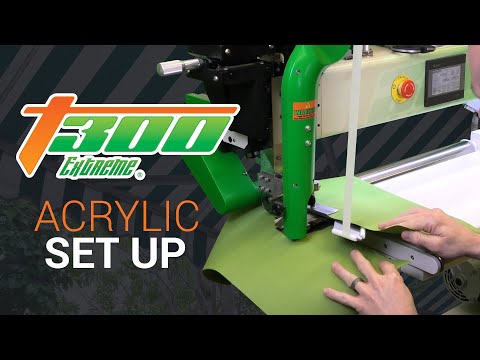
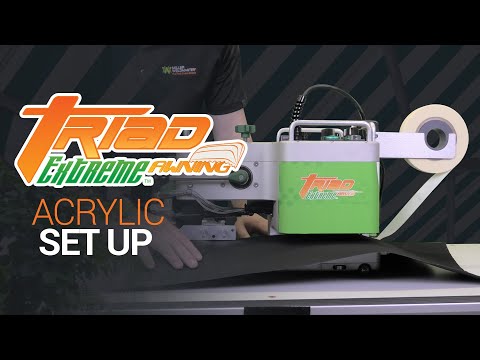
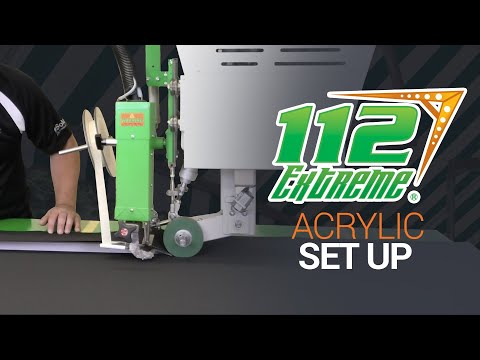
Miller Weldmaster máquinas especificamente concebidas para a colagem de acrílico, incluindo os modelos T300 Extreme, Triad Extreme e 112 Extreme.
O que é a soldadura de tecido acrílico?
The industrial process of permanently joining two or more pieces of acrylic fabric using a heat-activated adhesive tape, applied through a controlled welding machine. The result is a seam that is fully sealed, weather-resistant, and structurally superior to traditional sewn seams for most outdoor and marine applications.
Unlike PVC or polyurethane fabrics that melt and re-fuse under direct heat, acrylic fabric needs a heat-activated adhesive tape as the bonding agent — not raw heat — to create a permanent seam. Understanding this distinction is the starting point for anyone selecting a machine or setting process parameters for acrylic production.
Por que é que o tecido acrílico não pode ser soldado como o PVC
The core technical distinction: acrylic is a woven synthetic fiber, not a thermoplastic film. PVC and polyurethane fabrics melt under heat and re-fuse when pressure is applied — that is what direct thermoplastic welding exploits. Acrylic fabric does not behave this way. Apply direct heat without an adhesive and you risk glazing or scorching the surface without creating any seam bond. This is the most common misunderstanding buyers bring to the conversation, and it matters because it affects machine selection, tape selection, and every process parameter setting in production.
How Acrylic Adhesives Work
O processo de colagem térmica utiliza uma fita adesiva laminada — com adesivo forte em ambos os lados — colocada entre as duas peças de tecido acrílico. A máquina de soldadura aplica calor para ativar o adesivo, e a pressão exercida pelos rolos e barras de colagem fixa a união. Siga esta sequência em cada ciclo de produção:
- Position laminated bonding tape between the two acrylic fabric pieces, fully seated within the seam allowance.
- Apply controlled heat via the welding method — hot air, hot wedge or impulse — to activate the adhesive at the correct temperature range for acrylic.
- Apply pressure through bonding rollers and bars to consolidate the seam and ensure full contact between the tape adhesive and both fabric surfaces.
- Allow cooling before handling to achieve full bond strength. Pulling a seam before it has cooled is one of the most common causes of weak seams.
Properties of Acrylic Fabric
O acrílico é um material de alta qualidade nos mercados de toldos, náutico e de fabricação para exteriores, devido a características específicas de desempenho. Essas mesmas propriedades que o tornam valioso também tornam a colagem adequada fundamental — uma costura com falhas num produto de acrílico reflete-se no desempenho do tecido, e não apenas no processo de fabrico.
- Resistência aos raios UV: resiste ao desbotamento e à degradação da superfície causados pela exposição prolongada ao sol — a principal razão pela qual os fabricantes de toldos e de material náutico o recomendam.
- Absorção da humidade: afasta a humidade da superfície sem a absorver, mantendo a integridade estrutural em ambientes húmidos.
- Resistência a óleos e produtos químicos: apresenta um desempenho fiável em ambientes industriais e marítimos onde existem contaminantes.
- Elevada tenacidade e resistência à tração: mantém a tensão nas estruturas de toldos e de sombreamento sem se alongar nem ceder.
- Resistência às intempéries no exterior: mantém a integridade estrutural em condições de temperatura extremas, desde o armazenamento no frio do inverno até à exposição direta ao sol de verão.
Acrylic Fabric Bonding Methods: Comparing Hot Air, Hot Wedge and Impulse Welding
Choosing the right bonding method for acrylic fabric comes down to three variables: your production volume, your typical seam geometry, and the weight of the acrylic material you run. Each method activates the same heat-activated adhesive tape — what differs is how the heat is delivered and how fast the machine can move through a seam. The table below maps each method to the production context it serves best.
The most important thing to understand about the table below: none of these methods involve melting the acrylic fabric itself. Every row describes a mechanism for activating the adhesive tape. The fabric stays intact. The bond forms between the tape and the fabric surface, not between two fabric surfaces fused together.
Machine Settings for Acrylic Bonding: Temperature, Pressure, and Speed
Acrylic fabric requires a lower heat band than vinyl or PVC. The exact range depends on the specific acrylic blend and coating weight, but the guiding principle holds across materials: if you can see surface glazing on the fabric face, the temperature is too high. Reduce heat before increasing speed to compensate.
A velocidade é importante porque o tempo de exposição — o tempo durante o qual o tecido fica exposto ao calor no ponto de colagem — determina diretamente a quantidade de energia que o adesivo absorve. Uma velocidade demasiado elevada à temperatura correta resulta num adesivo insuficientemente ativado. Uma velocidade demasiado baixa à temperatura correta acarreta o risco de queimar o tecido. O equilíbrio correto determina-se através de uma costura de teste, e não por meio de cálculos.
Os ajustes de pressão afetam a qualidade da aderência do adesivo ativado às duas superfícies do tecido. Se a pressão for insuficiente, a fixação fica incompleta, especialmente nas bordas das costuras. Por outro lado, uma pressão excessiva sobre telas acrílicas leves pode distorcer a trama do tecido e causar problemas estéticos nos produtos acabados.
Antes de iniciar qualquer produção com um novo lote de tecido — ou após qualquer alteração nas configurações da máquina —, faça uma costura de teste num pedaço de retalho do mesmo material e realize um teste de descolagem antes de avançar. Os especialistas em aplicações Miller Weldmaster podem aconselhá-lo sobre os parâmetros iniciais para o seu tecido específico e modelo de máquina.
| Método | Como funciona | Melhor para | Velocidade | Consideração fundamental |
|---|---|---|---|---|
| Soldadura por ar quente | Controlled hot air stream activates adhesive tape between fabric layers | Costuras retas, produção de toldos de volume médio a elevado | De moderado a rápido | O controlo da temperatura é fundamental — uma temperatura demasiado elevada provoca o vitrificado da superfície do acrílico |
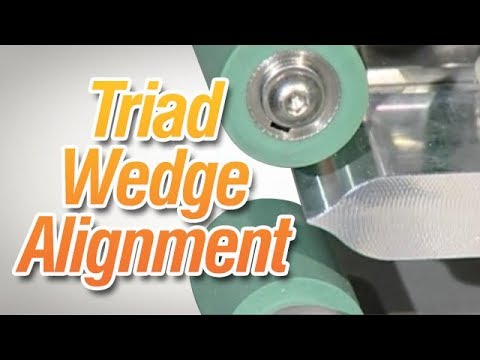
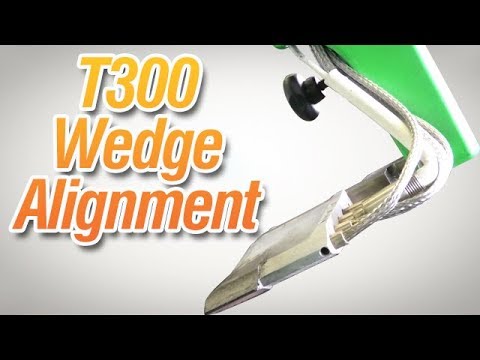
| Soldadura por cunha quente | Uma cunha metálica aquecida entra em contacto direto com as camadas de tecido para ativar a ligação da fita | Costuras longas e contínuas em tela acrílica mais pesada | Rápido para execuções contínuas | Requer um alinhamento preciso das cunhas; configuração mais demorada para tiragens curtas |
| Soldadura por impulso | Um breve impulso de calor controlado através do elemento de selagem ativa a ligação da fita | Costuras mais curtas, oficinas de menor dimensão, geometrias de costura variadas | Mais lento por ciclo, flexível | Um tempo de permanência constante é fundamental para garantir uma resistência repetível da costura |
Acrylic Fabric Bonding vs. Sewing: Why Industrial Manufacturers Are Making the Switch
Sewing has been the standard joining method for acrylic canvas for decades. It works — up to a point. At production scale, and across the service life of outdoor and marine products, three specific failure modes consistently push fabricators toward bonded seams. Understanding each one helps explain why the switch from sewing to bonding is not just a process upgrade but a warranty and quality management decision.
The Hidden Costs of Sewing Acrylic: Thread Fade, Needle Holes, and Rework
O desbotamento da linha é o primeiro tipo de avaria. O tecido acrílico é concebido para resistir aos raios UV — mantém a cor e a integridade estrutural mesmo após anos de exposição direta ao sol. O mesmo não se aplica à linha. A linha de poliéster ou nylon utilizada para coser a lona acrílica degrada-se mais rapidamente do que o próprio tecido. O resultado é uma discrepância visualmente marcante: uma linha desbotada a atravessar um tecido intacto. Para as lojas de toldos com obrigações de garantia, o desbotamento da linha é um motivo de reclamação, não se tratando apenas de uma questão estética.
As fugas nos orifícios das agulhas constituem o segundo tipo de falha. Cada ponto cria uma perfuração no tecido. Quando a linha é nova e não está degradada, preenche o orifício e mantém uma resistência à água razoável. À medida que a linha enfraquece devido à exposição aos raios UV, os orifícios abrem-se. A água infiltra-se na linha de costura — exatamente o tipo de falha que um produto para atividades ao ar livre ou náuticas foi concebido para evitar.
Rework costs compound both problems. Re-sewing an acrylic seam requires removing the old thread, resetting the sewing machine, and running the seam again — with a real risk that the needle holes from the first pass compromise the repair. Running the same seam through a bonding machine after initial validation takes a fraction of the time. At production scale, the labor differential adds up to a meaningful cost per linear foot.
Resistência da colagem: o que o acrílico colado consegue em comparação com a costura
The industry benchmark for awning and marine seams is 60–80% of base fabric tensile strength. A seam below that range is a warranty risk; a seam at or above it holds for the product's expected service life. Properly bonded acrylic seams with correctly specified heat-activated tape consistently reach this benchmark — and maintain it throughout the product's life because the bond is not subject to UV degradation the way thread is.
As costuras cosidas podem, inicialmente, apresentar valores de resistência semelhantes. A diferença surge com o passar do tempo. À medida que a linha se degrada, a resistência da costura diminui. Uma costura colada não sofre essa degradação. Para os fabricantes que oferecem garantias plurianuais aos seus produtos, a costura colada é a opção que apresenta menor risco.
| Issue | Costuras em acrílico | Juntas de acrílico coladas |
|---|---|---|
| Estanqueidade das juntas | Com danos causados por furos de agulha; degrada-se com o tempo devido à exposição aos raios UV | Fully sealed seam — no needle holes, watertight throughout service life |
| O fio desbota com o tempo | O fio perde a cor e a resistência antes de o tecido se rasgar | Sem fios à vista — o aspeto da costura acompanha a durabilidade do tecido |
| Fugas por orifícios de agulha | Cada ponto é uma perfuração; a situação agrava-se à medida que o fio se enfraquece | Eliminated — adhesive tape fills and seals the seam line |
| Velocidade de produção | Exige muito trabalho manual; depende da habilidade do operador e do enfiamento da máquina | Rendimento consistente; as configurações da máquina garantem resultados repetíveis |
| Taxa de retrabalho de costuras | A costura de reparação é demorada e pode exigir a substituição do tecido | A necessidade de retrabalho é mínima quando os parâmetros do processo estão corretamente definidos |
| Custo da mão-de-obra por metro linear | Maiores — custos com linha, trocas de agulha, tempo de inatividade do operador | Reduzir à escala de produção assim que as configurações forem validadas |
Onde se utiliza a colagem de tecidos acrílicos — Setores e aplicações
Os setores que utilizam lonas acrílicas partilham uma condição operacional comum: exposição prolongada aos raios UV, à humidade e ao desgaste mecânico. São precisamente essas condições que tornam as falhas de costura mais graves — e as costuras coladas mais valiosas. Abaixo encontram-se os principais setores a que Miller Weldmaster soluções de colagem de acrílico.
Toldos e estruturas de sombra
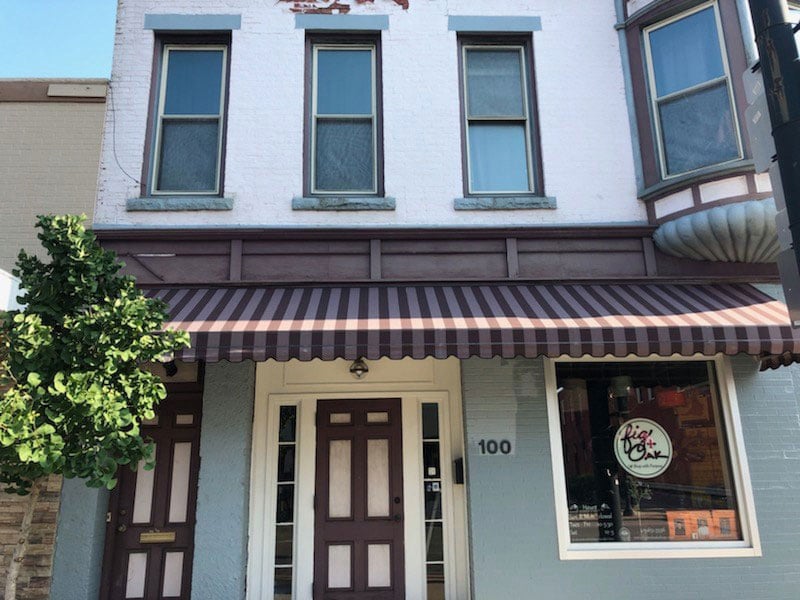
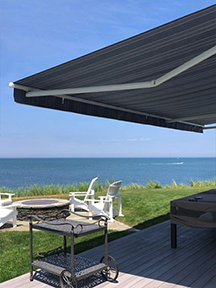
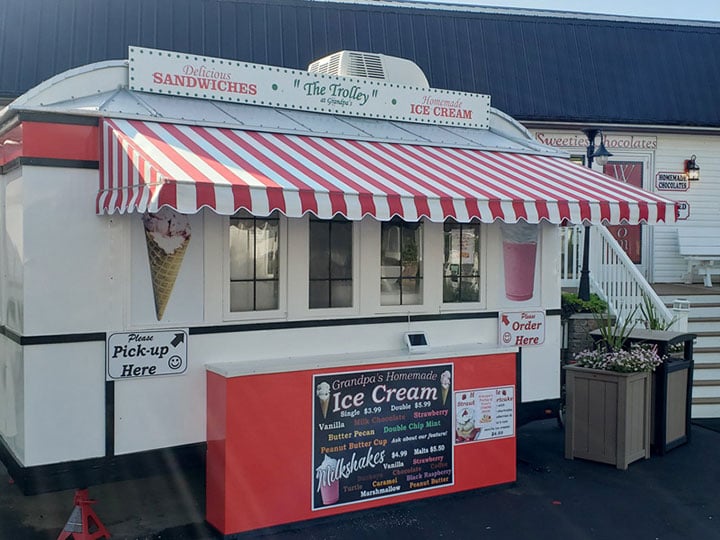
Awning fabrication is one of the main applications for acrylic fabric bonding. A commercial awning stays under UV and rain load for years before it is replaced, and sewn seams often show thread fade and needle hole leaks long before the fabric itself fails, which leads to customer callbacks and warranty claims.
Bonded seams address both failure modes. The awning keeps sealed seams through its service life, the fabricator handles fewer callbacks, and seam quality becomes a selling point when bidding commercial projects. See how four Miller Weldmaster machines transformed production at Lehr Awning in our acrylic awning case study.
Lonas náuticas e coberturas para barcos
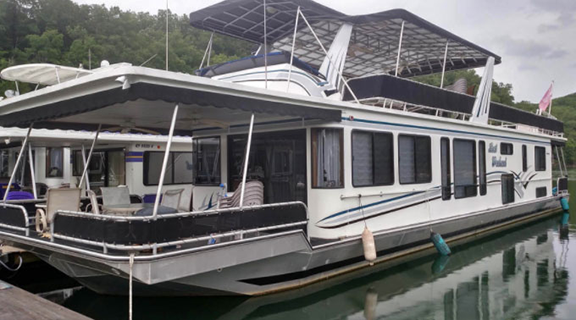
As aplicações marítimas acrescentam a água salgada e a flexão constante à exposição aos raios UV e à humidade a que as aplicações em toldos já estão sujeitas. Essas condições aceleram a degradação dos fios mais rapidamente do que qualquer outro ambiente — um produto de lona marítima cosida pode apresentar fugas nas costuras no espaço de uma única época de navegação, em condições de elevada exposição aos raios UV e à névoa salina.
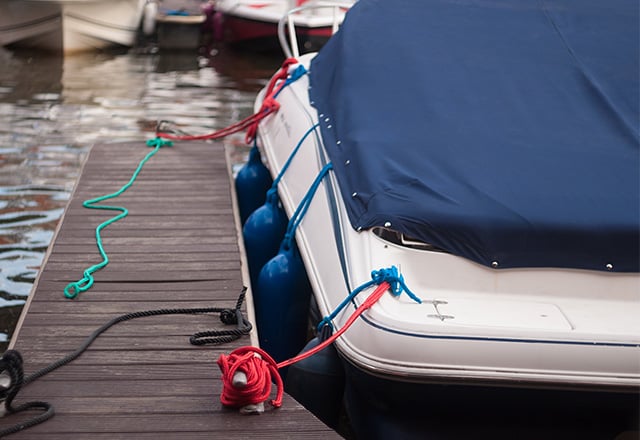
Bonded seams maintain watertight integrity across the flex cycles and chemical exposure that marine environments impose. Bimini tops, boat covers, and dodgers are the most common marine products where fabricators make the switch from sewing to bonding — and where the quality difference is most visible to the end customer.
Lazer ao ar livre e mobiliário
As capas para mobiliário de exterior, as coberturas de guarda-sóis e as capas para almofadas de exterior estão sujeitas à mesma exposição aos raios UV e à humidade que os toldos, mas acrescentam uma exigência estética do ponto de vista do consumidor. A costura é visível. As costuras dos produtos de mobiliário de exterior de gama alta apresentam desbotamento do fio e linhas de costura irregulares, o que transmite uma imagem de falta de qualidade ao comprador, independentemente de a costura ter ou não falhado efetivamente.
As costuras seladas apresentam um acabamento visualmente elegante — sem linhas de costura visíveis nem descoloração do fio. Para os fabricantes que posicionam os seus produtos no segmento de gama alta do mercado do lazer ao ar livre, a vantagem estética das costuras seladas é tão importante do ponto de vista comercial quanto a vantagem estrutural.
Aplicações industriais especializadas
Beyond traditional outdoor and marine applications, acrylic fabric bonding serves filtration bags, protective covers, and custom industrial enclosures where chemical resistance and seam integrity under mechanical stress are non-negotiable requirements. In these applications, a sewn seam is often disqualified from the specification outright — the perforation risk is incompatible with the containment requirement. Bonded acrylic seams provide the fully sealed surface these applications demand.
Choosing the Right Machine for Acrylic Fabric Bonding
A máquina adequada para a sua operação depende de três variáveis: a quantidade produzida por turno, os tipos de costura que os seus produtos exigem e o peso do tecido acrílico que utiliza. O quadro abaixo relaciona essas variáveis com as categorias de máquinas Miller Weldmaster . Considere-o como um ponto de partida para a conversa com um especialista em aplicações — e não como uma especificação definitiva.
Match the Machine to Your Production Volume
Operações de baixo volume e em pequenas oficinas
For shops bonding shorter runs, varied seam geometries, or a wide mix of acrylic products, impulse welding is typically the right starting point. The lower capital cost matches the production profile, and the flexibility to handle different seam lengths without major setup changes suits shops where no two jobs are identical.
Output profile: impulse machines handle seam lengths from a few inches to several feet, with cycle times that match manual-feed production paces. The key process variable is dwell time — the duration of the heat pulse. Getting that right for your specific tape and fabric combination is a one-time calibration that then produces consistent seams across the run.
Fabricantes de toldos e produtos náuticos de médio volume
Awning shops and marine canvas fabricators producing at mid-volume — regular production schedules, consistent fabric weights, and long continuous seam requirements — are the natural fit for hot air and hot wedge welding machines. Continuous seam production at consistent speeds is where these machines outperform impulse alternatives on a cost-per-linear-foot basis.
The T300 Extreme and 112 Extreme are Miller Weldmaster's purpose-built solutions for this production profile. Both are calibrated for acrylic bonding — the temperature range, pressure systems, and feed mechanisms are designed for the lower heat requirements and precise speed control that acrylic fabric demands.
Linhas de produção automatizadas e de grande volume
Manufacturers producing at scale — where the cost of machine downtime and seam rework is measured in production hours, not individual jobs — need machines with higher throughput and automation capability. High-speed hot air and hot wedge machines and automated bonding systems address that requirement.
The Triad Extreme and Miller Weldmaster's custom automation options serve this segment. The focus at this production level is not just machine capability but system integration: how the bonding station fits into the broader production line, what upstream and downstream handling looks like, and how quality control is built into the process rather than applied after it.
Falhas comuns na colagem de acrílico — e como evitá-las
A colagem acrílica produz juntas consistentemente resistentes quando os parâmetros do processo são definidos corretamente. Quando tal não acontece, a falha deve-se quase sempre a uma de três causas principais: calor excessivo, pressão insuficiente ou definições inconsistentes ao longo de um ciclo de produção. Cada um destes tipos de falha é evitável.
Failure Mode 1: Surface Glazing or Scorching
Surface glazing occurs when the temperature setting is too high for the specific acrylic fabric being bonded. Acrylic coatings — particularly the solution-dyed finishes used on premium awning and marine canvas — are sensitive to excess heat. Glazing affects both seam appearance and bond strength, because the adhesive on the tape may over-activate and lose structural integrity before the seam is set.
Prevention: Run a test seam at the lower end of your temperature range before committing to a production run on any new fabric lot. If glazing appears, reduce temperature before increasing speed. Slower speed at a lower temperature is consistently more reliable than faster speed at a higher one for acrylic materials.
Failure Mode 2: Peel Failure at the Seam Edge Due to Surface Energy
Edge peel is the result of insufficient pressure during bonding, or adhesive tape that was not fully seated within the seam allowance before heat was applied. The center of the seam may bond correctly while the edges lift — a failure that becomes visible immediately on peel testing or, worse, in the field after installation.
Prevention: Verify tape placement before feeding material through the machine. Confirm pressure roller settings are within the recommended range for the fabric weight. After the first seam of any production run, conduct a 10-minute peel test — pull the seam apart by hand at the edge — before continuing. If the edge peels cleanly, adjust before proceeding.
Failure Mode 3: Bonding Inconsistency Across a Production Run
Run-to-run inconsistency is the hardest failure mode to diagnose because individual seams may look acceptable while aggregate seam strength varies. The two most common causes are machine settings that drift over a long production run — particularly temperature, which can creep as the machine reaches thermal equilibrium — and fabric lot variation, where different coating weights or acrylic blends require different parameter settings.
Prevention: Calibrate machine settings at the start of each shift, not just at initial setup. When switching to a new material lot, treat it as a new material — run a test seam and validate before full production. Sample seam strength testing throughout a run (not just at the beginning) catches drift before it becomes a quality issue. Miller Weldmaster's service and training programs cover production calibration protocols for each machine model.
Se não encontrar o seu tecido na lista à esquerda, contacte-nos e informe-nos sobre as suas necessidades de soldadura de tecidos.